The LegacyTeam

TEAM Les Priest Team Blog
 RSS Feed
Subscribe and receive email notifications of new blog posts.
RSS Feed
A Message from CJM | 10 Posts
Announcement | 1 Posts
Augusta, ME | 2 Posts
Bangor, ME | 3 Posts
Buying a House | 2 Posts
Buying and Selling | 6 Posts
Careers | 1 Posts
Clean Up Clutter | 5 Posts
Community Activities | 10 Posts
Company News | 1 Posts
Cuisine | 2 Posts
Curb Appeal | 1 Posts
Entertaining | 3 Posts
holiday | 5 Posts
Home Improvement | 35 Posts
Home Maintenance | 7 Posts
Interior Design | 3 Posts
Kennebec River | 1 Posts
Maine | 5 Posts
Masiello Cares | 5 Posts
Monadnock Region | 1 Posts
Moving | 8 Posts
Nashua, NH | 2 Posts
Outdoors | 17 Posts
Portsmouth, NH | 1 Posts
Quechee, VT | 2 Posts
Rockland, ME | 1 Posts
Selling Your Home | 9 Posts
Technology | 2 Posts
Tips for Buyers | 1 Posts
Tips for Sellers | 6 Posts
Uncategorized | 2 Posts
Zoom Towns | 7 Posts
November
23
23
Your Guide to Taking Care of Indoor Plants This Winter
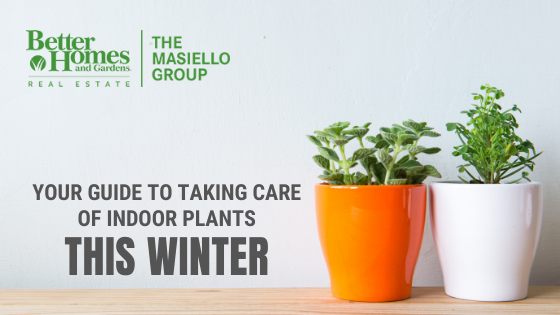
Winter's tough on us all, but you may have noticed it can be particularly tough on your indoor plants. Now, why should that be? Indoor plants get to stay indoors in the winter, out of the elements, just the same as they do in the summer. And yet, each winter, you've observed brown leaf tips and leaf drop once the heat comes on.
If you've got a nice collection of indoor plants, you want them to stay healthy all year long. Here are some tips for helping them get through New England's long, cold winter.
- Don't overwater.
Overwatering is easy to do in the winter. Your plants don't need nearly as much water as they do when temperatures are high and there's more sunlight. While they may not be totally dormant, your indoor plants will go into a resting mode over the winter, so they don't need as much water. Stick your finger in the soil to see if it's drying out. It's best to run water through the plants in the sink or bathtub, so the roots get wet. Don't let the plant sit in a puddle in a saucer. - Place plants in good sun.
You may be blessed with good exposure from southern or eastern windows to get the best angle of sunlight. If not, you may need to add supplemental lighting with a grow light. Cluster plants in the best lighting, staggering smaller plants on tables or shelves to get more plants near the light source. Clustering plants will also create more humidity. - Watch out for too-dry conditions.
Your home's humidity may be as low as 10 to 20 percent with a furnace on. Most house plants come from the tropics and prefer more humid conditions. While misting plants isn't that helpful, you can improve things by adding a humidifier in the room where your plants are. Try raising the plants on their trays with pebbles, with water in the trays. Group plants in one room to raise humidity. A telltale sign of too-dry conditions is brown leaf tips and dropped leaves. - Mind the temperature.
Your indoor plants don't like it too cold, but neither do they like overheated conditions. If you can swing it, keep night-time temperatures in the 65-70-degree range at night, and 70-80 degrees in the day. You can go a bit cooler, but higher than 80 degrees is too warm. Also, keep your plants away from heat sources such as the fireplace, space heaters, or the blast from the central heating. Those bursts of heat and dry air will damage the plants. - Cut back on fertilizing.
As mentioned above, your indoor plants need a rest in the wintertime, so don't give them an energy spike with a burst of fertilizer. You can do that in the spring when they have the urge to grow again. - Bringing outdoor plants indoors.
If you have plants that normally live in a protected area outdoors, such as a patio, but you need to get them out of freezing temperatures, you can try grouping them with your other plants in front of windows and cutting back on food and water to help them rest. Some plants like rosemary or lavender like a period of dormancy and may do fine in a 20-40-degree garage or basement. Whatever plants you choose to bring inside, do so before the first frost, so they have time to adjust to lower light and humidity.
Need help selling your home? Our real estate agents can help. Contact us today.

Privacy Policy / DMCA Notice / ADA Accessibility


This site is hosted, designed and copyright
© 1994 - 2026 by
Delta Media Group, Inc. -- Patent Pending --
Agency License Information: Better Homes and Gardens® and the Better Homes and Gardens Real Estate
Logo are registered service marks owned by Meredith Corporation and
licensed to Better Homes and Gardens Real Estate LLC. The Masiello Group
Limited fully supports the principles of the Fair Housing Act and the
Equal Opportunity Act. Each franchise is independently owned and operated.
Any services or products provided by independently owned and operated
franchisees are not provided by, affiliated with or related to Better
Homes and Gardens Real Estate LLC nor any of its affiliated companies.