The LegacyTeam

TEAM Les Priest Team Blog
 RSS Feed
Subscribe and receive email notifications of new blog posts.
RSS Feed
A Message from CJM | 10 Posts
Announcement | 1 Posts
Augusta, ME | 2 Posts
Bangor, ME | 3 Posts
Buying a House | 2 Posts
Buying and Selling | 6 Posts
Careers | 1 Posts
Clean Up Clutter | 5 Posts
Community Activities | 10 Posts
Company News | 1 Posts
Cuisine | 2 Posts
Curb Appeal | 1 Posts
Entertaining | 3 Posts
holiday | 5 Posts
Home Improvement | 35 Posts
Home Maintenance | 7 Posts
Interior Design | 3 Posts
Kennebec River | 1 Posts
Maine | 5 Posts
Masiello Cares | 5 Posts
Monadnock Region | 1 Posts
Moving | 8 Posts
Nashua, NH | 2 Posts
Outdoors | 17 Posts
Portsmouth, NH | 1 Posts
Quechee, VT | 2 Posts
Rockland, ME | 1 Posts
Selling Your Home | 9 Posts
Technology | 2 Posts
Tips for Buyers | 1 Posts
Tips for Sellers | 6 Posts
Uncategorized | 2 Posts
Zoom Towns | 7 Posts
July
12
12
National Pet Fire Safety Day: Tips for Keeping Your Pet Safe
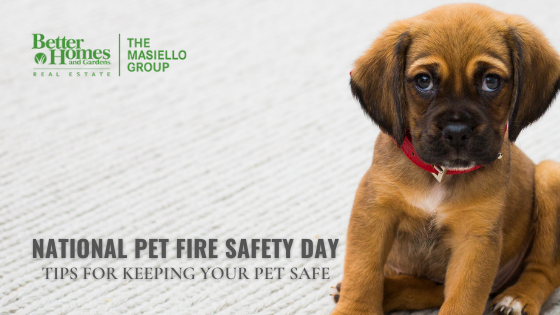
Pets are a part of the family in many Northern New England homes!
And July 15th is National Pet Fire Safety Day, a great reminder to fine-tune your family's fire safety plan so that all your family members are protected.
Our real estate agents also recommend making a few changes around your home so that your furry family members don't inadvertently start a fire. Here are some valuable tips to help keep your pet safe in case of an emergency.
Safety Tips for National Pet Fire Safety Day
- Closely Monitor Open Flames
A candle or tabletop fireplace is an easy way to create a cozy, inviting environment. Unfortunately, pets and open flames are a potentially dangerous combo. A curious cat or a wagging dog tail can quickly overturn a candle or open flame. When you're using an open flame, make sure it's always monitored by an adult. Depending on the habits and behaviors of your pets, you may prefer to keep them in another room safely away from the candle. Or, you might opt for flameless alternatives.
- Cover the Knobs on Your Stove
Kitchen stove knobs are another potential hazard due to the ease with which they turn. A kitty exploring the counters or a pup trying to reach the leftovers can easily brush against your stove's knobs. Invest in knob covers to prevent them from inadvertently being turned on.
- Secure Loose and Exposed Cords
Cords are a tempting chew toy for cats, dogs, and rabbits. However, a damaged cord is more likely to start an electrical fire. Cover your loose cords with covers that prevent your pets from chewing on or playing with them.
- Include Your Pet in Your Family's Evacuation Plan
Every household should have an evacuation plan in case of a fire. The plan should include each family member's possible escape routes (depending on the location of the fire and the individual's location) and a meeting place for everyone to go once they've escaped. Your pets should be included in this plan. Assign each pet to certain family members; these individuals will secure the pet and get them out of your home. For example, if your dog prefers a certain family member and follows them around, they should be assigned to that individual. If a cat likes to sleep in a specific room, the family member closest to that room may be assigned to the cat. See that everyone knows your pets' favorite napping and hiding spots, just in case their assigned person is away. Keep a reliable means of transporting the pet, like a leash or cat carrier, close to evacuation points.
- Alert Rescuers
Place a rescue alert sticker on your front door or window that lets first responders know pets are inside your home. The sticker should include the species of every pet in your home, and the name and phone number of your veterinarian. You can even order a free rescue alert sticker from the ASPCA.
- Get Your Pets Microchipped
In the commotion of a house fire, it's not uncommon for pets to get loose. Help anyone who finds your pet return them to you by microchipping them and confirming that the info for the microchip is up-to-date.
- Opt for a Monitored Smoke Detector
Your home should always an ample number of smoke detectors. However, if your pets are frequently home alone, it's smart to invest in a monitored smoke detector. A monitored smoke detector is usually installed with a security system that's then monitored by your selected company. If smoke is detected, your monitoring company will contact the fire department. This reduces the response time for an emergency, and it potentially decreases the length of time your pets are exposed to smoke.
- Get Your Pet Used to a Crate or Leash
Since you need a means of safely transporting your pet out of your home, you want to make sure your pet is comfortable with your selected method. If your pet has never been in a carrier, trying to force them into the carrier in the midst of a fire is guaranteed to be a stressful situation for everyone. Instead, get your pet used to its leash (and harness) or crate. Start with having your pet wear the harness and walk on a leash for short periods of time, offering plenty of treats and praise. Gradually increase the time they wear it. When using a carrier or crate, introduce it to your pet slowly. Put the crate in an area where your pet likes to spend time. After a few days, put treats and toys inside the crate to entice them to enter it. Then, once they willingly enter it, close the carrier's door, offering a treat and praise. Once your pet is used to the door being closed, try carrying them in the carrier, eventually taking them outside.
Want a home with more space for your two-legged and four-legged family members? Contact us today to start your search!

Privacy Policy / DMCA Notice / ADA Accessibility


This site is hosted, designed and copyright
© 1994 - 2026 by
Delta Media Group, Inc. -- Patent Pending --
Agency License Information: Better Homes and Gardens® and the Better Homes and Gardens Real Estate
Logo are registered service marks owned by Meredith Corporation and
licensed to Better Homes and Gardens Real Estate LLC. The Masiello Group
Limited fully supports the principles of the Fair Housing Act and the
Equal Opportunity Act. Each franchise is independently owned and operated.
Any services or products provided by independently owned and operated
franchisees are not provided by, affiliated with or related to Better
Homes and Gardens Real Estate LLC nor any of its affiliated companies.